?>

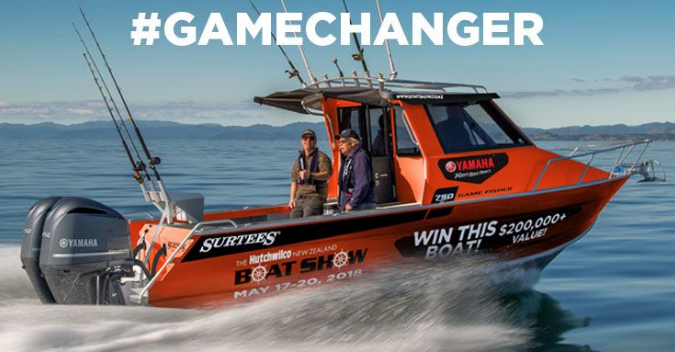
Hutchwilco Boat Show 2018

17th-20th May

ASB Showgrounds Greenlane


LegaSea will be taking FishCare again to the Hutchwilco NZ Boatshow, May 17-20th. Come on down and talk to the team about how we can work together to better help our fishery, by reducing our impact and staying informed not he issues that face one of NZ’s favourite pastimes.

For more info visit The Hutchwilco New Zealand Boat Show website.

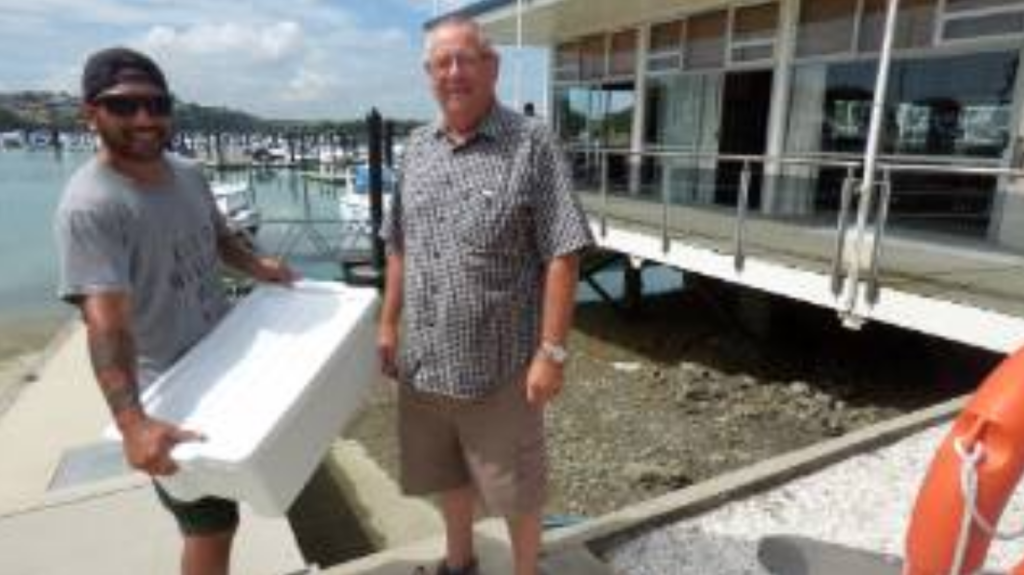
An Auckland boating club is putting unwanted fish cuts to good use and helping tackle nutritional, environmental and social issues at the same time. The Outboard Boating Club (OBC) on Tamaki drive have partnered with the Papatuanuku Kokiri Marae in Mangere for its health food programme.

READ MORE


Returning safely from your fishing trip is a basic part of best practice.

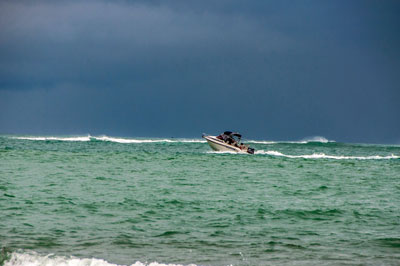
New Zealand’s weather can be changeable and not as predictable as we would all like.

Unfortunately, if things go wrong on the water, they can go badly very quickly.

Preparation plays a big part in preventing tragedy or mishap while out fishing.

Firstly, if you are the skipper of the boat you need to be prepared to operate your craft appropriately.

This means having an understanding of your craft, an understanding of the conditions you will be boating in and an understanding of how to interact with other water users.

Completing a day skipper’s course is an excellent way to prepare for boating (www.coastguard.nz/education) or learning from an experienced person who can teach the necessary skills.

Part of learning how to operate in New Zealand waters is having a grasp on your own limitations and the limitations of the craft you are in charge of.

Preparation of the boat and engine is the next important consideration.

Sea worthiness is ensured by regular maintenance and upkeep.

Prepare for outings by checking that the vessel is fit for purpose and that all the necessary equipment is in working order. This helps to reduce any potential problems while on the water.

Coastguard’s busiest time on the water often coincides with October’s Labour Weekend, when people get out on the water after months of dormancy and problems arise.

Sometimes it’s simple things like running out of fuel and sometimes it’s mechanical problems that could have been avoided with a pre-season tune up before going to sea.

Being prepared with the appropriate skills and knowledge as well as the proper preparation of gear will help minimise any problems on the water.

Related Posts


    What safety gear is necessary for boating?

    The amount and type of safety gear varies a little with the size of vessel but many of the following items are important for most sizes of vessel.

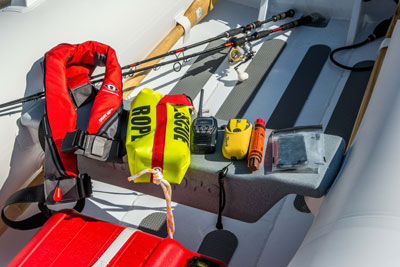
    Safety gear should include items such as:

    • A life jacket for each person on board (best to wear them as well, not just stored somewhere).
    • A secondary means of propulsion if the engine stops working (a pair of oars or second outboard for example).
    • Two forms of communication e.g. a VHF radio and cell phone (in some form of waterproof protection)
    • Something to bail water out of the vessel if necessary
    • Anchor
    • Flashlight
    • Knife
    • Rope
    • First Aid kit
    • Fire extinguisher
    • Unless your boat is very small, a chart or technology that enables you to see reefs and other underwater hazards is important e.g. Depth Sounder / Chart Plotter
    • Consider obtaining a PLB (Personal Locator Beacon) or buying a pack of flares.

    Safety also necessitates making judgment calls on the conditions you will fish in.

    Checking the weather forecast and understanding the direction and influence of wind and swell you will be fishing in is important to making the right calls.

    Check more than one source of information. Swellmap and Metservice are two reputable sources.

    Once you have established that the conditions are safe throughout the duration of your trip, it is time to tell someone where you are going and what time you will be coming home.

    If something beyond your control happens and search and rescue has to come find and you, you will be grateful they know where to look.

    You don’t have to give away your favourite fishing location, but detail enough information so that rescuers know where to start looking.

    Hopefully you will never need the services of search and rescue however if you do, it is most likely Coastguard who will be coming to your aid.

    Consider getting a membership because of its benefits and the extra piece of mind knowing if your boat breaks down, you can get help for a much lower price than a non-member.

    Related Posts


      It’s often said that a man’s best friend is a dog, but when it comes to fishing nothing beats seabirds.

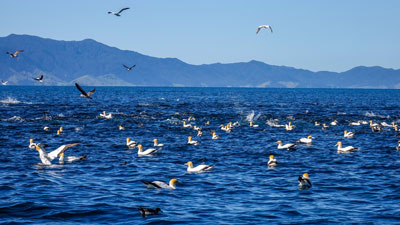
      Circling or diving seabirds are good indicators that life is not far below the water’s surface.

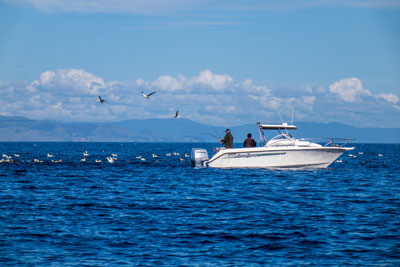
      Fishers get excited when the birds are “working” and will often head towards the action to join in the marauding.

      Seabirds use their excellent sense of smell and sharp eyesight to spot “meatballs”, tight swarms of baitfish being driven to the surface by bigger predators such as kahawai and kingfish.

      In the warmer months, these meatballs can be accompanied by larger hunters such as marlin, tuna and other pelagics.

      When fishers and sea bird’s paths cross, there can be unfortunate incidents involving entanglement or harm from hooks and lines.

      Sea birds that are injured may die or become unable to feed their young, which means the chicks could also die.

      As responsible fishers, it up to us to learn how to interact with sea birds as they are one of our best friends when it comes to finding the fish.

      Seabird survival tips:

      1. Fish tidy. Clean the decks and put any scraps or bait in a bucket or bins.
      2. Fish fast. Use a heavy sinker on your rig to quickly get the bait past diving sea birds.
      3. Bait choice is important. Change the size or type of bait, soft baits tend to be less attractive than fleshy baits.
      4. Burley well below the birds. Sink burley containers deep, below the birds and closer to the fish.
      5. Deter birds from your gear. Create a ‘safe zone’ around your fishing area using streamers or a quick, regular blast of the deck hose.
      6. Move on. If the birds are not deterred from your gear take a break or move to another spot.
      7. Fish at either end of the day. There are fewer birds around at night or early morning.
      8. Be mindful of where you fish. Move away from seabird colonies and their feeding paths.
      Related Posts


        New Zealand has more types of breeding seabirds than anywhere else in the world, and some of them are rarer than our kiwi.

        On the east coast of the North Island it is common practice for fishers to spend a whole day chasing “working birds” following schooling fish.

        It is this interaction between humans and seabirds that causes their demise.

        Seabirds can get tangled in fishing line and nets or caught on hooks, and if a breeding adult is injured or killed its chicks can die of starvation.

        And just like an undersized fish, the way you treat a hooked seabird can make all the difference to its survival.

        Fortunately, the gear you use to release a seabird is very similar to the gear we use when fishing so it is up to fishers to learn some simple techniques.

        Making small changes to the way we all fish can make a big difference to seabird survival rates, and you might catch more fish too.

        If you do happen to entangle or catch a sea bird, there are techniques you can use to minimise harm to the bird, whether it has been fouled in the line or has caught a hook in its beak or stomach.

        Follow the step by step guide in the Safe Release Seabird Guidelines issued by Southern Seabird Solutions Trust (www.southernseabirds.org ) to learn –

        1. How to de-hook a captured bird.
        2. What to do if a bird has swallowed a hook.

        Seabirds are nature’s fish finders and a Kiwi anger’s best friend. Let’s do our best to look after our seabirds and marine environment.

        Related Posts

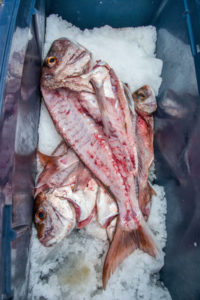
          Many people fillet their catch but then discard the rest of the fish (head, frame, offal).

          This may represent up to 70% of the fish being wasted.

          Utilising the whole fish is the best conservation practice as it means we make the most of our natural resources.

          There are numerous ways to utilise the whole fish.

          Removing the offal and gills before splitting and smoking is an easy way to use as much flesh as possible.

          Steaming the fish frame and head can help produce delicious stock for soups and chowders and help retain much of the flesh on the fish.

          If you have surplus heads and frames, there will most likely be a number of people your community who would gladly collect and use them.

          How do you easily find these grateful members of your community?

          It’s a fairly easy exercise because a website and an app have been developed to connect people who have fish with those who would like them.

          Use the app or go to www.freefishheads.co.nz.

          Related Posts


            There is a hierarchy of best practice when releasing fish.

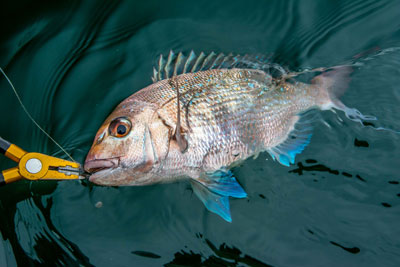
            First, the best way to release fish is to avoid handling of the fish to prevent loss of scales or mucus.

            This is accomplished by keeping the fish in the water and removing the hook with a pair of pliers (see removing the barbs on your hooks to facilitate this process).

            Barbless hooks make this easy with a flick of the wrist to remove the hook and then the fish can swim away.

            If conditions prevent the safe release of the fish because of a rocking boat or it is difficult to reach the fish in the water, lifting the fish out of the water to use the pliers is the next step.

            This works well for small undersized fish as they can be flicked off the hook and back into the water without being touched.

            If it is a larger fish or if this is not practical then using a rubber mesh net (while in the water) to hold the fish for release is preferable.

            If you must handle the fish, please don’t use a wet cloth or sponge.

            The material can easily remove the protective mucus and make the fish susceptible to infection and mortality.

            Wet hands are the preferred way to handle your fish, while it is in the net or on a cool wet surface.

            Use the towel on your hands afterwards. The fish may swim away strongly but still die later if its mucus has been removed and infection sets in.


            Related Posts


              Using large hooks with large baits is an effective way to avoid catching undersized fish.

              Use circle hooks instead of J hooks wherever possible as circle hooks predominantly

              hook fish in the lip instead of the gut. We recommend non-offset circle hooks,

              especially for gamefish as this is supported by international research and the

              International Game Fish Association (IGFA).

              Matching the size of the hook to the species is helpful.

              If targeting snapper for example, 7/0 or larger J hooks are recommended.

              Circle hooks don’t have a standard sizing between manufacturers, however, choosing a similar sized hook is a good place to start (7/0 or larger).

              A corresponding large sized bait will help target the larger sized fish and avoid catching undersized fish.

              If you are bait fishing with large hooks and losing lots of bait to the small ones, there are other options open to you.

              It can be frustrating to be getting bites and not catching fish, however, changing to smaller hooks to catch the bait thieves is not the answer.

              Some patience can pay off with larger hooks as losing bait and feeding the fish can draw the larger fish to your area where they eventually get caught.

              Another option is to simply move to a different location and see if you can find the sort of habitat holding larger fish.

              Related Posts

                Employing the right techniques in how we fish is the first step to helping reduce our impact on our fishery and the marine environment. The next step is to avoid catching fish you don’t want.

                Selectivity is the key word when it comes to considering which techniques will best help target the fish we want to catch and keep.

                There are several techniques that you can use to improve your fishing success while reducing your impact on the fishery, these include:

                1. Use suitable lures, like softbaits or slow jigs.
                2. Use big baits with big hooks, preferably circle hooks.
                3. Use Target appendage hooks.

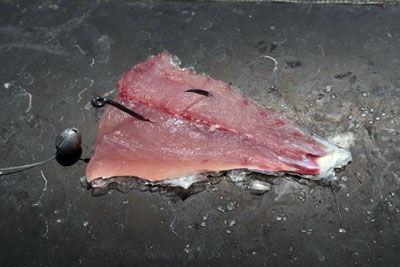
                Modern lures such as softbaits and slow jigs of suitable size not only catch fish of legal size more often, they are far less likely to gut hook fish.

                If the lures you choose come fitted with treble hooks (stickbaits for example) change these to single hooks as these do less damage to the fish and make it easier to release the fish.

                Single hooks are safer to use especially if the fish is prone to thrashing around during handling.

                Related Posts
                  FishCare Supporters
                  Fishcare is an initiative of LegaSea and the New Zealand Sportfishing Council